Changes are afoot at Independent Publishing.
This month we welcome a new contributor, NSW-based author and educator Nigel George. Nigel is a computer whiz who managed to quit his job on the back of his success selling his self-published how-to guides to web programming. Fittingly, his article looks at how the self-publishing industry has changed in the past five years. Scroll down to enjoy his take.
This issue also includes the last feature article by our resident self-publishing expert Ellie Marney. Ellie’s ‘self-publishing essentials’ series is a valuable set of how-to guides for authors, no matter where you are in the self-publishing journey. She has covered everything from the writing process to distributing your book, and how to run a publicity and marketing campaign. You can read all her articles here. Thanks Ellie!
As one contributor leaves and another contributor joins, we’re looking to make other changes to ASP in the next few months. If you have any topics or issues you’d like to see raised in future issues, you can send me an email or leave a comment on our Facebook page.
Bye for now.
Brad Jefferies
Editor
Independent Publishing
contact@australianselfpublisher.com
In the US, a number of self-published authors were winners at the Romance Writers of America’s (RWA) annual RITA Awards, which recognise excellence in romance novels and novellas. Among the 13 category winners were Elizabeth Dyer’s Fearless for best romantic suspense, Kennedy Ryan’s Long Shot for best contemporary romance (long), Susannah Nix’s Advanced Physical Chemistry for best contemporary romance (mid-length), M Malone’s Bad Blood for best romance novella and Mia Vincy’s A Wicked Kind of Husband for best historical romance. For the full list of winners, visit the RWA website.
Locally, there’s several self-published authors among the finalists for the Romance Writers of Australia (RWA) Romantic Book of the Year Awards. The King’s Obsession (Tanya Bird) is shortlisted for best historical romance; Happy Ever After (Joanne Tracey) is shortlisted in the romantic elements category; and Edge of Eon (Anna Hackett) is shortlisted for best speculative romance, while a self-published trifecta are up for the romantic suspense category: Glass Clouds (Suzanne Cass), Mission: Her Protection (Anna Hackett) and Undercover Fighter (Aislinn Kearns). The RWA winners will be named on 10 August. For more information, see the website.
Meanwhile, L M Ardor’s self-published The Practice Baby is longlisted for best first fiction in the Ned Kelly Awards, the Australian Crime Writers Association’s (ACWA) annual awards. For more information about the longlist, visit the ACWA website.
The Australian Society of Authors (ASA) is warning local authors about an email campaign from self-publishing company EC Publishing, which offers to exhibit the recipients’ titles at the 2019 Miami International Book Fair.
The ASA said Australian authors are being emailed about the scam, which has been around since 2013.
The email claims ‘your book has been chosen to have a special spot for the upcoming Miami International Book Fair which will be happening this Nov. 17-24, 2019.’ According to the ASA, the email may quote the author’s exact book title and ISBN. Authors will be asked for money to exhibit a book and possibly provide collateral material, alongside an offer of re-publication of your book for a ‘significant sum’.
‘Our concern is that our members will take up this offer believing their book will be spotlighted at the Book Fair, and not realise they are actually being targeted for money,’ the ASA said.
The ASA will contact Miami Book Fair organisers to alert them to EC Publishing’s email campaign.
For more information, visit the ASA website here.
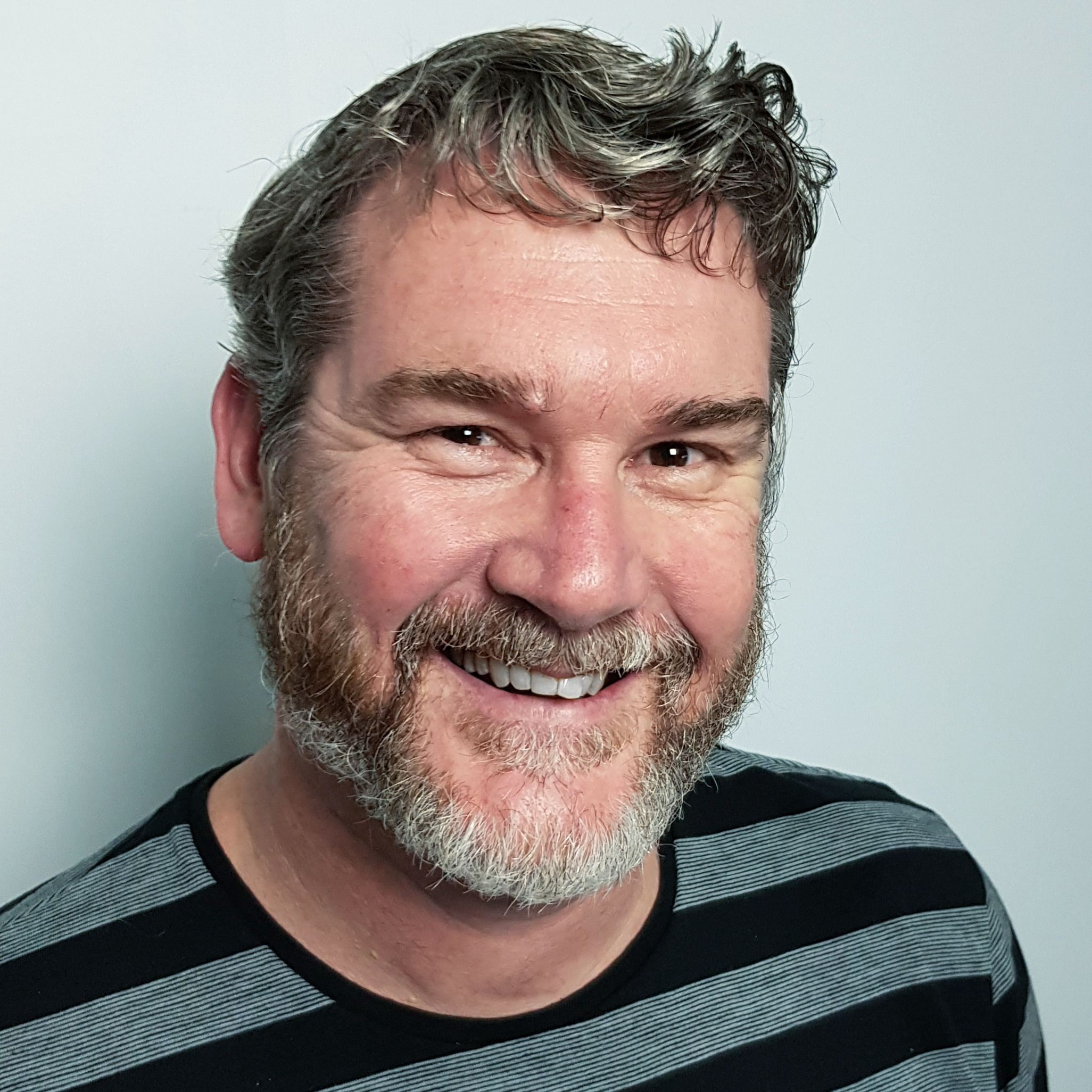
Nigel George is an educator and author of five books on technology and self-publishing. In his first piece for Independent Publishing, he surveys the past five years of the self-publishing industry to look at what has changed and what authors need to do to stay ahead.
This year marks five years since I took my writing career seriously, four years since I wrote my first book, and three years since my first publishing contract. For the last year, I have worked as a full-time writer, having made enough money from self-publishing to support myself.
Coincidentally, 2019 is also the fifth anniversary of two significant events in the maturation and growth of the professional self-publishing industry—the release of the first Author Earnings report (n.b. the Author Earnings website was shut down in early 2019; archives of the reports can be found in the Internet Archive) and the launch of Kindle Unlimited.
Hugh Howey (author of Wool) was frustrated with the lack of data available to successful self-publishers in 2014. With assistance from a programmer, he created a data scraper that extracted sales data from booksellers’ websites.
By 2014 the publishing industry had undergone irrevocable change. Kindle was in its seventh year, and many authors like Hugh were making substantial incomes outside of mainstream publishing. Meanwhile, the traditional publishing industry was going backwards. Major publishers were closing or merging, and bricks-and-mortar book businesses like Borders and Angus and Robertson collapsed.
The Author Earnings reports were significant in that they gave new authors solid data to compare the pros and cons of traditional publishing versus self-publishing.
While authors weathered a constant barrage of doom and gloom from the traditional publishing industry, the new data showed a very different picture. Self-publishing was maturing from the realm of amateurs and charlatans to a legitimate and, ultimately, more lucrative path for professional authors who wanted more control over their writing career.
Five years on, professional self-publishers now not only hold the keys to the kingdom, but they’ve stolen the crown jewels too.
Indies are now the biggest game in town
For clarity, an independent publisher, or indie, is a professional who self publishes their books either under their name or through a publishing business they own. Not to be confused with small publishers who publish the work of multiple authors.
Indies sold 43% of all books sold online in 2017. The so-called Big Five publishers came in a very distant second with 26% of total unit sales. The remaining 31% of sales were distributed among multiple small publishing companies and other entities that sit outside of the usual publishing paradigm (e.g. writers cooperatives).
In terms of total dollars, indies earned about US$314 million (A$554.3m) in the US market in 2017. The Big Five are still ahead of the indies with US$559 million (A$809m) in total earnings; however, this is misleading as indies make far higher royalties than traditionally published authors.
Since 2015, earnings for traditionally published authors have been declining significantly. Indies earn just under 75% of all income paid to authors when you account for the difference in royalties. Allowing for the fact that a handful of mega-sellers dominate traditional publishing sales, the money paid to the traditional mid-list author is vanishingly small.
In 2019, if you are traditionally published, you are either a big seller or nobody. If you listen to the publishing industry and author advocacy organisations, the traditional mid-list author is a critically endangered species. However, if you look at the data, it’s easy to see the journeyman author—the one making a decent living from their writing—is not endangered, they’ve just moved to independent publishing.
In 2018, thousands of independent authors earned over US$50,000 (A$72,000) and over 1000 earned over US$100,000 (A$144,000) on Amazon alone. Of all authors who debuted in the last five years, three out of every four making over US$50,000 (A$72,000) are indies.
Amazon’s bid for world domination is near complete
This year also marks five years since the launch of Kindle Unlimited (KU). Since it’s launch, KU has paid out US$840 million (A$1.2b) to authors worldwide. With KU and direct ebook sales, Amazon controls 89% of the ebook market. It also commands 72% of online new adult book sales and nearly half of all book sales by volume. Amazon’s dominance provides both opportunity and risk for authors in 2019 and beyond. While many more authors are making substantial incomes on KU, Amazon could use that market power to put downward pressure on author earnings.
Your chances of success are better … and worse
I firmly believe that authors have a far greater chance of making a decent living as an author now than they did five years ago. Professional authors willing to devote time to learning the fundamentals of successful self-publishing no longer have to waste years trying to get through the slush pile, only to see 90% of their income siphoned off by publishers and agents. ‘Traditional or self-publish?’ is no longer a valid question for anyone serious about their writing career because there are no barriers or gatekeepers between them and their ideal reader.
Unfortunately, the lack of barriers also makes success in 2019 more difficult. While billions of electrons are wasted lamenting the mountains of crap published each year, all these discussions miss the point. Authors who wish to succeed are not competing against the crap-mountain, they are competing against other authors who invested in self-publishing and marketing skills, and have built themselves an audience. Production is also much more important now. While it’s always been the case that authors making big money are also prolific, it’s the cost of doing business in 2019, especially for fiction authors. The challenge is achieving a balance between the needs of a professional self-publishing business and the need to follow the passion that drew us to the industry in the first place—writing books.
Nigel George is an author and educator. He is the author of five books on technology and self-publishing. Originally traditionally published, he discovered that authors have a far greater chance of success if they independently publish their books. When not writing and publishing more books, Nigel spends his time teaching other authors how to succeed at self-publishing. You can learn more about his work on his website: indiepublishingmachine.com.
While print on demand (POD) is the most heavily promoted model of book printing for self-publishers who need physical copies of their books, it’s not the only choice out there. POD has a number of advantages, but there’s another possibility that indie publishers might like to think about: offset printing.
What is offset printing?
Most physical books on the market—those printed by traditional publishers—are offset printed. Offset printing involves engaging a company that prints a large run of your books. Prices vary by company, but by using economies of scale, offset books are vastly cheaper to produce and are typically higher quality. Offset printing also offers more flexibility with formats, sizes and finishes (including spot colour, foil highlights and more). It’s a particularly good option for self-publishers of graphic novels and hardcover children’s books, who need non-standard trim sizes and coloured illustrations contained in a great quality package.
What’s the process?
First, you must send your files—cover and internals—to your chosen printer. The printer will typically send you a printed proof or email a PDF proof to ensure you’re happy with the finished result, then you’ll be ready to authorise a bulk order (500–3000 books per print run or more). Once your run is complete, the printer will deliver them to an arranged location. Then it’s up to you to send out your books to retailers. Self-publishers who print offset runs typically sell on consignment to bookstores, library suppliers, specialty retailers, through their own websites, or at public markets.
Australian firms like The Book Printing Company, Eureka Printing, Digital Print Australia, Goliath and Ligare offer offset, but one of the most affordable offset options is the UK print broker Imago, which prints in Hong Kong. Overseas freight costs are highly competitive, and with new US tariffs about to come into effect on printing suppliers in China and Hong Kong, overseas printers are actively courting non-US clients with great deals on printing and freight.
Price advantage
Let’s look at a simple example: a 5”x8” paperback of 244 pages, printed in black ink on crème paper, with a gloss cover. Printing this book on demand would cost $8.35 per unit, including GST. Printing offset with an overseas firm, the unit cost would be $4.96 (for 500 copies), $3.42 (for 1000 copies), or $2.54 (for 3000 copies). Freight cost will add 30c–$1 per copy to your order, but that’s a huge price difference overall.
What’s the downside?
It’s a big initial investment: for 3000 copies of the book described above, with freight included, you’re paying approximately $10,000 right off the bat. And at those quantities, you may not fit all the books in your home, so you may have to think about—and pay for—warehousing. You also have to handle all the postage and distribution to retailers, and factor in the time spent preparing orders and arranging invoices. If retailers are slow with payment, you may have to chase up invoices. The biggest question is, will you be able to sell all those books? If you have a good publishing reputation, good connections with retailers and firm chains of supply, that’s great—otherwise, you’ll end up with 3000 books sitting in your living room.
The upside
While offset printing may be a financial gamble, there are some real advantages. The book production process is extremely professional, and you’re creating a higher quality product. Your books are considerably cheaper to produce, allowing you to offer higher discounts to retailers (which usually means increased orders). Although self-distribution increases your workload, offset printing allows you to create a more flexible, responsive distribution system so you can offer returns, fulfil orders promptly, and create good community connections with retailers.
Finally—most temptingly—your profit margin for offset is higher. Using the above example, if your book retails for $20 with a retail discount of 50%, printing on demand will make you a profit of $1.65. Printing offset, with a book that costs $2.54 to produce, and adding in freight (60c), warehousing (50c) and postage (approx. $1.45 per book, via standard Aus parcel post of up to 3kg), your book costs $5.09 to create and distribute, so your profit on the same book is $4.91.
Testimonial
Claudia Rowe is a regional self-publisher of hardcover children’s books, currently printing with Imago UK/HK. Here’s what she has to say about offset printing:
‘When I set out to print my first book, I had no idea about extent, imprints, binding or what the shiny stuff on a cover was called. A generous friend-of-a-friend who worked in publishing lent me her lunch hour and decoded the mysteries of printing for me. At the end of the meeting, she gave me the business card for a printing broker based in Sydney. This broking company has since handled all my printing (now totalling 46,000 books). I can describe to them what I want in the simplest language (‘that shiny stuff’) and they will interpret the request to the printer in China, from where I receive a high-quality bound book to the exact specifications.
The process is smooth, professional and relatively fast. It is also cost-effective when ordering quantities greater than 1000. I choose recycled paper and I am assured the factory is operating ethically as the printer is a member of SMETA (Sedex Members Ethical Trade Audit). As a one-woman-band, going through a printing broker in this way has enabled me to deliver a high-quality printed product and freed me up to focus more on writing and illustrating. It’s been great!’
Claudia has included a handy video about her self-publishing experience and printing offset here. You can also find out more about offset printing by looking through this series of articles by Joel Friedlander. Happy printing and good luck!
Ellie Marney is a teacher and hybrid YA author. She lives in Victoria with her family, and her most recent book series, Circus Hearts, was published in November 2018. Find her at www.elliemarney.com or on Facebook, Twitter or Instagram.
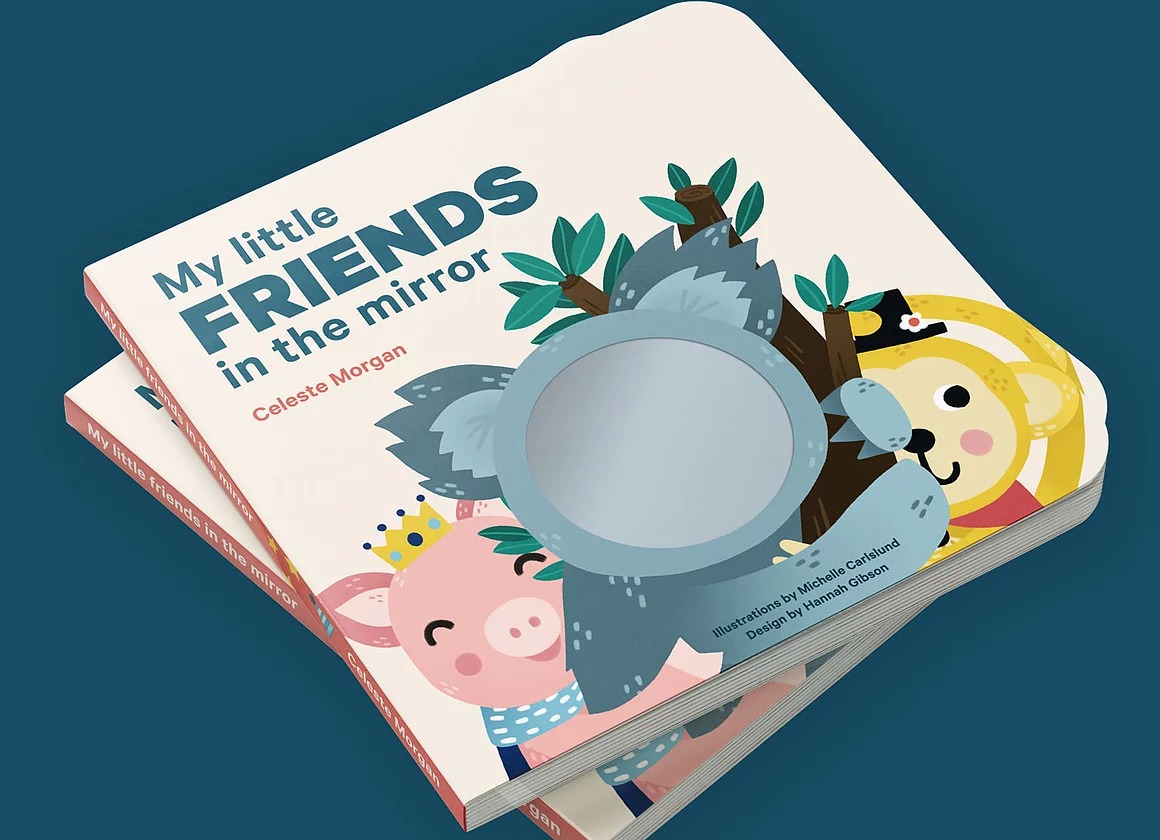
Last month, Readings Kids manager Dani Solomon named Celeste Morgan’s My Little Friends in the Mirror as one of the store’s most popular self-published titles. The book, which began its life as a project on crowdfunding site Pozible, features a mirror on every page ‘to encourage play with their favourite friend—their own reflection!’ Morgan spoke to Independent Publishing about the idea behind the book, the crowdfunding campaign and how she managed the logistics of a tricky printing project.
Describe My Little Friends in the Mirror.
The idea for the book came when I noticed how absolutely obsessed my five-month-old son was with looking in the mirror. You could tell he actually thought there was another baby behind the mirror—so I thought it would be great if there was a book about baby’s ‘little friends in the mirror’. The book includes a fun animal character with a mirror face on each page—a series of little friends for baby to play with—before the final page reveals that that adorable baby in the mirror is actually the baby themselves. I think Hannah, the book designer, described it best when we first discussed the idea: ‘Oh, it’s like Snapchat in book form’. Ultimately, babies love looking at themselves, and this little book provides never-ending entertainment!
When I was creating the book, I did some research about what babies respond to at different ages. The book purposely targets different learning stages. For the first three to six months, it’s all about the mirrors themselves, helping babies learn about faces and gestures. The next six months are more about play and interaction, so each page includes a facial expression or action for parents to enjoy with baby—roar with the little lion, give the kitten a kiss, or snooze like the koala. Then for toddlers, the fun comes with the repetition in the story, the animal sounds and the role-playing.
What has the response to the book been from parents and booksellers?
The response has been so amazing! The crowdfunding campaign showed that people liked the concept, so that gave us a lot of confidence, but there was still so much that could go wrong in production, it was nerve-racking. We were so relieved when the shipment arrived and everything looked perfect. A few friends who received copies from their crowdfunding pledges actually commented how impressed they were that it looked like a real book. I think there is an impression that if you self-publish its going to look a bit like something you might produce for a school project!
The feedback from absolute strangers has been the most heartening. Some ‘fans’ of the book have stocked up on five copies at a time, ready to give them out as unique little gifts at the next baby shower.
We’ve had really great feedback from booksellers, too. It’s popular for babies aged 0–2 and also makes a great gift. It often takes a leap of faith for booksellers to stock an indie book, but all of our stockists have sold out within weeks and then reordered, so it’s been really heartening.
Here are a few snippets of feedback:
- ‘I can actually truthfully say that when we have it in stock it is our best seller for babies under 24 months. It’s such an incredible addition to our range. We even have families buying multiple copies for friends. So glad we found this gem’—Amy Davy, Pickwick and Sprout
- ‘The colours are magical, the mirrors are the best I’ve seen in a book and it’s just wonderful’— Dayna Rixon, school teacher and mother
And of course the babies like it too! We are so glad they love it, and even more than we thought they would! We are always being sent pictures of bubs giving the mirror a big slobbery kiss or smiling at themselves. I’ve now got a second son who is four months old and it’s a joy to watch him smile and play with the mirrors. The real surprise is that older kids aged 2–4 also really like it. It’s really both a book and a toy so it has wide appeal.
Your Pozible campaign for the book exceeded its $11,850 target. Why did you decide to start the crowdfunding campaign?
I’d never done a campaign before, and I was only vaguely familiar with the concept. But as I looked more and more into the costs of printing a board book, it became clear that we needed some serious up-front capital. While print-on-demand is a cost-effective model for novels and paper-based picture books, board books are complex to print, and the printers required a minimum print run of 1000 books. Crowdfunding is really a low-risk pre-order system. It’s a way of testing appetite in the market and securing some up-front customers and it just made sense—though putting yourself out there and pitching for people’s support was completely terrifying!
With so many projects on Pozible and similar sites, what were some of the steps you took to make your project visible and ensure it reached its target audience?
It took a lot of preparation and hard work! I’d love to say we just posted it on the website and it grew organically, but we weren’t that lucky. We basically had to become very persistent and proactive with our marketing for a month, spending every spare hour getting in touch directly with friends and colleagues or developing content for social media. Thankfully, Pozible provided some really great tips on how to run a campaign. It was crucial to have a plan and follow it, and not let yourself get disheartened by the enormity of the target. I broke it down into smaller goals of around $200 a day to keep focus. Strategically, our focus was firstly on our immediate circle of friends and family, with the aim of building up a healthy base of 20–30% funding in the first few weeks. No one likes to back a loser, so its important to have some runs on the board before going public as such. We then gradually expanded the focus—asking friends to share and promote to their friends—then we utilised social media, mainly Instagram and Facebook, to reach out to the general public. We tried to make it as fun and playful as possible with lots of videos of babies dancing in the mirror!
We were lucky to actually get three wonderful booksellers (Coventry Bookstore, Treetop Toy Shop and Pickwick and Sprout) to jump on board and pre-order some books. That’s a fantastic thing to see in the industry, with bookstores willing to back a concept and an independent author from day one.
My Little Friends in the Mirror is a mirror book, which sounds like a production nightmare for a self-publisher to wrangle. Can you talk a little bit about how you managed the project from concept to reality?
It was definitely a long and eventful journey. Luckily the first step was easy. I love the work of Danish artist Michelle Carlslund, and I have some of her prints on our nursery wall. I was thinking I wanted illustrations in the same style and was wondering how to find an illustrator with a similar ‘look’. My partner suggested just trying my luck with asking Michelle, and thankfully she loved the concept and said yes!
Finding the right printer was a major challenge. Firstly, most printers we approached weren’t interested in a small print run that was as complex as this. Secondly, it was really difficult to find a printer that could access good mirror materials that had a decent reflection. I’d seen other books and toys with a mirror and most of them were terrible quality. We eventually found a printer who gave us a great sample mirror and was keen to work with us. However, once we were ready with the design, they informed us they were too busy to take on our order. Back to square one. We ordered a sample from another printer and it was awful, we nearly cried when it arrived in the post, thinking we had wasted everyone’s money. We went back to the original printer and grovelled and luckily, they took us on. But after this delay and a few unanticipated interruptions like Chinese New Year, we were a few months late on the intended Christmas delivery date for our supporters, but it was worth the wait.
What would be your top tips for those starting out in self-publishing—what lessons have your learned from publishing My Little Friends in the Mirror?
- You can never do too much research, and luckily there is more and more great information out there as self-publishing is becoming so popular. Support groups on Facebook are also really handy.
- Don’t be afraid to put yourself out there and ask others to help. A year ago, I never could have believed how far we have come with this book or even that it exists. I’ve worked on a few children’s book manuscripts before, but until now, I thought the only way was to submit to a publisher and wait patiently to be ‘discovered’. With self-publishing it’s so empowering to take control of every aspect of the creative process yourself and I’ve been amazed at the willingness of people to support the journey.
- Don’t underestimate the work involved. It’s almost a full-time job at times. I thought the hardest part would be production, but it’s actually the marketing and distribution after the book is published. Saying that, I’ve loved every minute of it, and it’s so great to learn about every part of the process.
What will you publish next?
I’d love to publish another book for babies, as they really seem like a neglected audience in the book world. Board books are expensive to produce, but they are (somewhat strangely) priced very cheaply based on a perception of the reluctance of the market to pay for baby books. However, I think there’s a real demand for good-quality baby books, and with good reason. Parents love the opportunity to share a book with their bub, and if the book is playful, interactive and good for baby’s development—all the better.
I’d also love to publish for older kids. In my day job, I work in the environmental sector, so I’m using that knowledge to create a series of stories that connect kids with the natural world in a playful way. It’s so important that we talk about climate change with kids—not in a way that causes fear or sorrow, but in a way that inspires.
Learn how to create a social media marketing plan that promotes your book and author platform—in less than an hour! Read more.
|