
Mihai Eminescu Central University Library: An active cultural hub
This week we hear from the Mihai Eminescu Central University Library in Iasi, Romania:
Mihai Eminescu Central University Library has become a central cultural institution in Iasi Romania. Founded almost 200 years ago in 1835, the library was named after the famous Romanian poet Mihai Eminescu and now serves Iasi’s entire university and academic community.
While the library itself has changed locations and names many times over the years, it moved into the same building as the King Ferdinand I Foundation after World War II, merging both their collections.
The current building hosting the library was built in the 1930s, and houses an impressive collection of 2 million books, including manuscripts and rare books from monastic and private collections.

Mihai Eminescu Central University Library.
Simona Sînzianu, the head of information and digital technologies department spoke with B+P about the diversity within the collections.
‘The library preserves one of the most important and diverse documentary collections in the country,’ says Sînzianu. ‘The library ensures access to scientific, educational and cultural resources, both on-site and remotely, benefiting the local university community, members of Romanian academic circles and users from other parts of the world.’
The library also strives to include local and national writers often featuring their work in the collection, including writers such as Valeriu Gherghel, Narcis Dorin Ion, Bogdan Crețu and Bogdan Boeru.
A rigorous user-first approach keeps the vast collection relevant. ‘Continuously listening to users through surveys, feedback and usage data allows us to adapt collections and services effectively,’ said Sînzianu.
Staff retain a close eye on the digital data available to them, such as the specific requests users can make via the website, circulation statistics and interlibrary loan requests. Integral to this user focus is the library’s deselection process, where outdated and damaged books are removed to make space for new ones. A list of the most borrowed books and periodicals, organised by their respective field, is shared via the website. The library’s top five most borrowed books from 2009–2019 focus on pedagogy and mathematics, with Constantin Cucos’ Pedagogy topping the list.
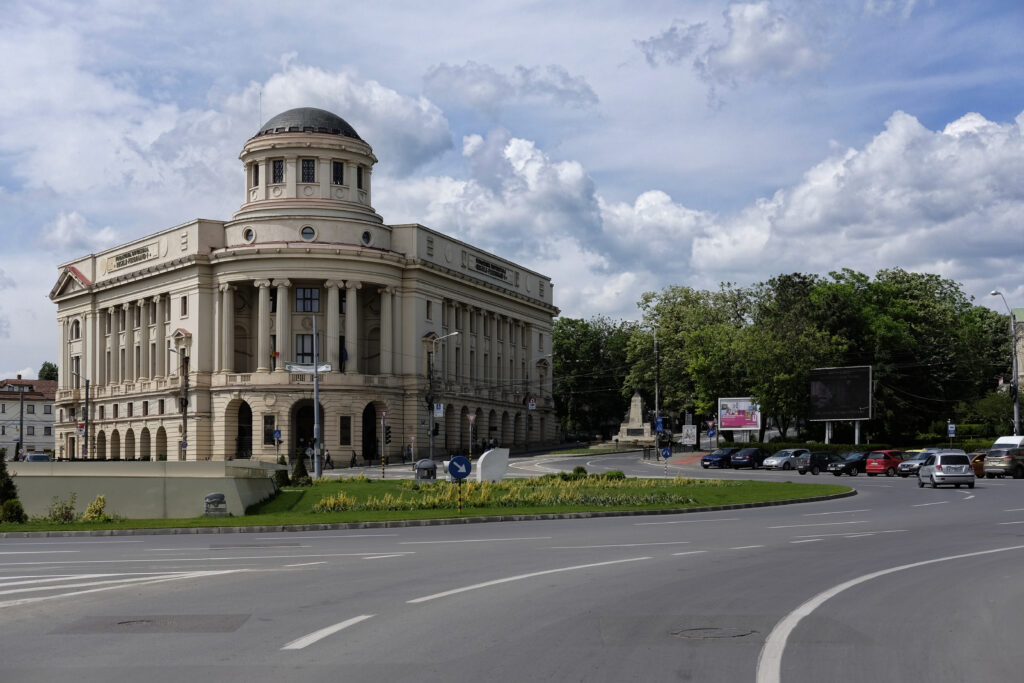
Mihai Eminescu Central University Library.
Collaborating with universities, publishing houses and local institutions (such as Iasi City Hall, Queen Mary Museum, Iasi Travel Association) expands the community while simultaneously meeting their needs.
‘We offer and host a variety of events,’ said Sînzianu, listing exhibitions, conferences and guided tours ‘so locals can interact with the library’s collections in other ways than traditionally reading and borrowing books’.
One of the library’s most successful initiatives is Library Days, which has been running for more than 10 years.
Library Days is a program with a variety of events over multiple days, including conferences, book launches, exhibitions, workshops and competitions such as treasure hunts and creating trailers for books.
Programming like this has a significant impact, not just through user involvement but also by increasing the library’s visibility within the local community and the media. It also strengthens the library’s image as an active cultural hub, dedicated to education and academic dialogue, said Sînzianu.
‘Visibility requires consistent communication,’ Sînzianu added. ‘Promoting services and events across multiple platforms – especially social media – has proven to be essential for engaging users and building community awareness of library resources.’

Mihai Eminescu Central University Library.
She also emphasised the importance of digital innovation. ‘Investing in digital resources and services (like digital libraries, mobile access, and online interactions) is essential,’ she said. ‘Especially to reach users who are unable to come to the library.’
This outreach includes organising online information sessions for students who can’t come to the library, providing virtual support for users seeking recommendations or other information from the library or remote access to the library’s digital library.
Finally, Sînzianu emphasised the value of preparation when it comes to providing a library service. ‘The ability to switch to remote services and maintain continuity during crises (e.g. pandemics, funding cuts) has shown us the importance of having flexible digital infrastructure and contingency plans in place.’
Category: